Online Learning Portal
Online Learning Portal

Hybrid Classes
We provide offline, online and recorded lectures in the same amount.

Personalised Mentoring
Every aspirant is unique and the mentoring is customised according to the strengths and weaknesses of the aspirant

Topicwise Mindmaps
In every Lecture. Director Sir will provide conceptual understanding with around 800 Mindmaps.

Quality Content
We provide you the best and Comprehensive content which comes directly or indirectly in UPSC Exam.

DAILY NEWS ANALYSIS
 PRINT
PRINT
12 November, 2019
Min Read
Syllabus subtopic: Conservation, environmental pollution and degradation, environmental impact assessment.
News: The Jammu and Kashmir UT will set up a 10-member committee that will declare Dal Lake, an Eco-sensitive Zone.
Prelims focus: Eco Sensitive zones- how are they declared and key provisions in this regard, about Dal Lake.
Mains focus: Significance and the need for these zones, and issues related to management of these zones.
Mission: According to a report, the area of the Dal Lake has shrunk to 24 sq km from 31 sq km and the lake has witnessed significant changes in land use and cover, apart from increasing human population.
About Eco-sensitive zones
The Environment Protection Act, 1986 does not mention the word “Eco-sensitive Zones”.
The above two clauses have been effectively used by the government to declare Eco-Sensitive Zones or Ecologically Fragile Areas (EFA). The same criteria have been used by the government to declare No Development Zones.
Criteria:
The MoEF (Ministry of Environment & Forests) has approved a comprehensive set of guidelines laying down parameters and criteria for declaring ESAs.
These include Species Based (Endemism, Rarity etc), Ecosystem Based (sacred groves, frontier forests etc) and Geomorphologic feature based (uninhabited islands, origins of rivers etc).
About Dal Lake:
Source: The Hindu
 18 Mar, 26
The Supreme Court of India recently gave a final three-week deadline to the Telangana Assembly Speaker to decide pending disqualification petitions against defecting MLAs under the Anti-Defection Law. What is the Anti-Defection Law? The Anti-Defection Law was introduced through the 52nd Amendment (1985), which added the Tenth Schedule to the
 18 Mar, 26
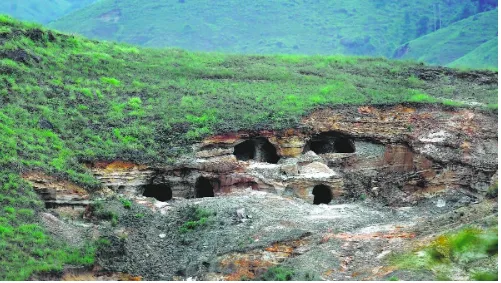
A major disaster unfolded in East Jaintia Hills, Meghalaya, when at least 18 workers died following an explosion in an illegally operating rat-hole coal mine. This incident highlights the continued prevalence of rat-hole mining despite bans imposed by the National Green Tribunal (NGT) and the Supreme Court of India. Rat-hole mining is driven
 17 Mar, 26
India’s aviation sector has grown rapidly, becoming a major economic success story. However, regulatory oversight has not evolved at the same pace. Data-driven monitoring of fares and market behavior is essential to ensure fair competition, prevent market abuse, and shift from reactive crisis management to proactive regulation. Challen
 14 Mar, 26
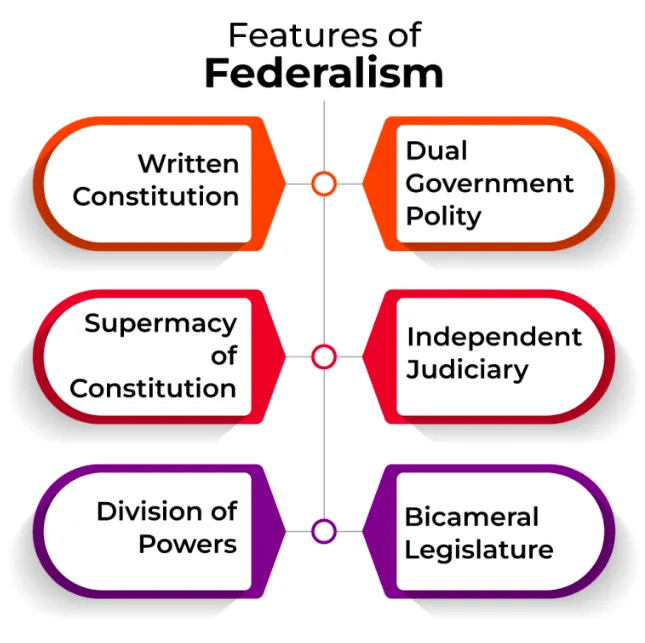
Recently, a high-level committee on Union–State relations submitted its first report to the Government of Tamil Nadu. The report examines the distribution of powers and responsibilities between the Union and the States, highlighting ongoing debates regarding the balance between central authority and state autonomy. This discussion is clos
 14 Mar, 26
The relationship between India and the United Arab Emirates has evolved from a traditional energy-based partnership into a comprehensive economic and strategic relationship. Over the years, strong political trust, growing trade, and expanding investments have transformed bilateral ties into a diversified economic corridor. The economic partnership
 22 Mar,2026










Our Popular Courses
Module wise Prelims Batches
Mains Batches
Test Series

 24 × 7 Support :
8287714422
24 × 7 Support :
8287714422 Whatsapp :
8010068998
Whatsapp :
8010068998 Email Us: query@aspireias.com


 My Notes
 Geography And Environment


