Online Learning Portal
Online Learning Portal

Hybrid Classes
We provide offline, online and recorded lectures in the same amount.

Personalised Mentoring
Every aspirant is unique and the mentoring is customised according to the strengths and weaknesses of the aspirant

Topicwise Mindmaps
In every Lecture. Director Sir will provide conceptual understanding with around 800 Mindmaps.

Quality Content
We provide you the best and Comprehensive content which comes directly or indirectly in UPSC Exam.

DAILY NEWS ANALYSIS
 PRINT
PRINT
13 November, 2019
4 Min Read
Syllabus subtopic: Indian Constitution- historical underpinnings, evolution, features, amendments, significant provisions and basic structure.
News: President Ram Nath Kovind has approved a proclamation imposing President’s Rule in Maharashtra under Article 356(1) of the Constitution, following a recommendation from Governor Bhagat Singh Koshyari.
Prelims focus: What is President’s rule? Implications of the rule.
Mains focus: Controversies over the misuse of this power and measures to address them.
Issue: In the recent elections to the 288-member Maharashtra Legislative Assembly, the BJP got 105 seats, the Shiv Sena got 56, NCP 54 and the Congress 44 seats. Although the BJP and Shiv Sena had fought the election as an alliance, after the results, the alliance fell apart on the issue of who will be the chief minister. No single party got a majority in the House, and no alliance could be formed claiming a majority. Hence the governor of the state recommended President’s Rule, which was imposed.
About the President’s Rule
Article 356 of the Constitution of India gives President of India the power to suspend state government and impose President’s rule of any state in the country if “if he is satisfied that a situation has arisen in which the government of the state cannot be carried on in accordance with the provisions of the Constitution”.
How does it affect the people of the state?
While day to day operations of the state will not be affected, President’s rule would mean that for the next six months no major government decisions will be made. No projects will be sanctioned, and no major policy decisions including subsidies and others will be made — keeping the progress in a can until the next government is formed.
Revocation:
Why is the governor’s move being criticised?
When the governor of Maharashtra could not find any party or combination of parties that appeared to have a majority in the Assembly, before recommending imposition of President’s Rule, he should have sent a message to the House under Article 175(2), after summoning it under Article 174(1), asking the House to assemble, deliberate and then inform him within a reasonable period of time in whom it has confidence, so that he could be appointed chief minister.
In S.R. Bommai’s case, it was held that imposition of President’s Rule was a very serious step, and is a last option, to be resorted to only when all other recourses have failed. Hence without resorting to the options available, recommending imposition of President’s Rule straightaway is clearly seen as unconstitutional.
Source: The Hindu
 18 Mar, 26
The Supreme Court of India recently gave a final three-week deadline to the Telangana Assembly Speaker to decide pending disqualification petitions against defecting MLAs under the Anti-Defection Law. What is the Anti-Defection Law? The Anti-Defection Law was introduced through the 52nd Amendment (1985), which added the Tenth Schedule to the
 18 Mar, 26
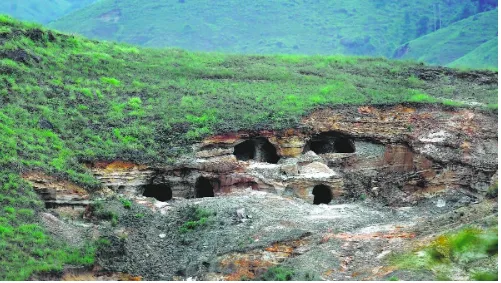
A major disaster unfolded in East Jaintia Hills, Meghalaya, when at least 18 workers died following an explosion in an illegally operating rat-hole coal mine. This incident highlights the continued prevalence of rat-hole mining despite bans imposed by the National Green Tribunal (NGT) and the Supreme Court of India. Rat-hole mining is driven
 17 Mar, 26
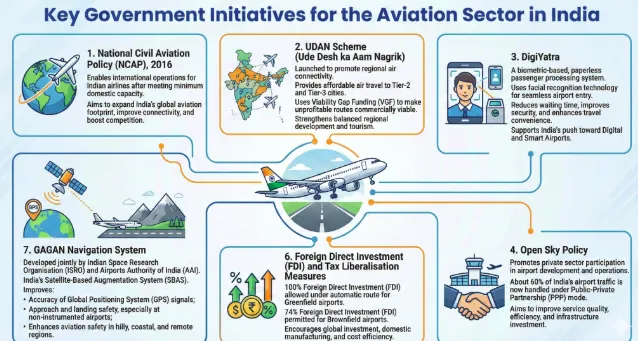
India’s aviation sector has grown rapidly, becoming a major economic success story. However, regulatory oversight has not evolved at the same pace. Data-driven monitoring of fares and market behavior is essential to ensure fair competition, prevent market abuse, and shift from reactive crisis management to proactive regulation. Challen
 14 Mar, 26
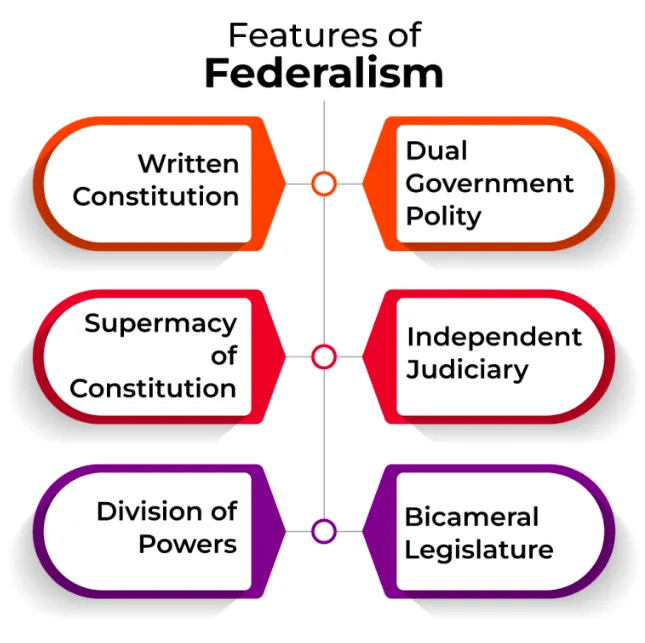
Recently, a high-level committee on Union–State relations submitted its first report to the Government of Tamil Nadu. The report examines the distribution of powers and responsibilities between the Union and the States, highlighting ongoing debates regarding the balance between central authority and state autonomy. This discussion is clos
 14 Mar, 26
The relationship between India and the United Arab Emirates has evolved from a traditional energy-based partnership into a comprehensive economic and strategic relationship. Over the years, strong political trust, growing trade, and expanding investments have transformed bilateral ties into a diversified economic corridor. The economic partnership
 22 Mar,2026










Our Popular Courses
Module wise Prelims Batches
Mains Batches
Test Series

 24 × 7 Support :
8287714422
24 × 7 Support :
8287714422 Whatsapp :
8010068998
Whatsapp :
8010068998 Email Us: query@aspireias.com


 My Notes
 Geography And Environment


