×

UPSC Courses

DNA banner

DAILY NEWS ANALYSIS

  • 21 February, 2021

  • 12 Min Read

NITI Aayog meeting

NITI Aayog meeting

  • States should work towards reducing compliance burden for citizens to ensure ease of living and to promote ease of doing business, stressing the importance of a better coordination between the Centre and the States for the development of the country.
  • “There are thousands of compliance requirements within the government that we can remove for the common man... There is no need to ask people again and again when there is technology. States should come forward. I have also said this in the Government of India and our Cabinet Secretary is following this. The number of compliance requirements has to be reduced. This is also very important for ease of living,” Mr. Modi said, speaking at the sixth meeting of the NITI Aayog Governing Council.
  • Twenty-six Chief Ministers, three Lieutenant-Governors and two administrators attended the meeting, besides Union Ministers, special invitees and NITI Aayog officials.

NITI Aayog

  • The NITI Aayog was formed on January 1, 2015. NITI stands for “National Institution for Transforming India”.
  • It is the country’s premier policy-making institution that is expected to bolster the economic growth of the country.
  • It aims to construct a strong state that will help to create a dynamic and strong nation. This helps India to emerge as a major economy in the world.
  • The NITI Aayog’s creation has two hubs called “Team India Hub” and “Knowledge and Innovation Hub”.
  1. Team India: It leads to the participation of Indian states with the central government.
  2. The Knowledge and Innovation Hub: it builds the institution’s think tank capabilities.

Objectives of NITI Aayog

  1. The active participation of States in the light of national objectives and to provide a framework ‘national agenda’.
  2. To promote cooperative federalism through well-ordered support initiatives and mechanisms with the States on an uninterrupted basis.
  3. To construct methods to formulate a reliable strategy at the village level and aggregate these gradually at higher levels of government.
  4. An economic policy that incorporates national security interests.
  5. To pay special consideration to the sections of the society that may be at risk of not profiting satisfactorily from economic progress.
  6. To propose strategic and long-term policy and programme frameworks and initiatives, and review their progress and their effectiveness.
  7. To grant advice and encourage partnerships between important stakeholders and national-international Think Tanks, as well as educational and policy research institutions.
  8. To generate knowledge, innovation, and entrepreneurial support system through a shared community of national and international experts, etc.
  9. To provide a platform for resolution of inter-sectoral and inter-departmental issues to speed up the accomplishment of the progressive agenda.
  10. To preserve a state-of-the-art Resource Centre, be a repository of research on good governance and best practices in sustainable and equitable development as well as help their distribution to participants.
  11. To effectively screen and assess the implementation of programmes and initiatives, including the identification of the needed resources to strengthen the likelihood of success.
  12. To pay attention to technology improvement and capacity building for the discharge of programs and initiatives.
  13. To undertake other necessary activities to the implementation of the national development agenda, and the objectives.

The NITI Aayog is based on the 7 pillars of effective Governance. They are:

  1. Pro-people: it fulfils the aspirations of society as well as individuals
  2. Pro-activity: in anticipation of and response to citizen needs
  3. Participation: involvement of the citizenry
  4. Empowering: Empowering, especially women in all aspects
  5. Inclusion of all: inclusion of all people irrespective of caste, creed, and gender
  6. Equality: Providing equal opportunity to all especially for youth
  7. Transparency: Making the government visible and responsive

NITI Aayog Composition

  • Prime Minister of India is the Chairperson
  • Governing Council consists of the Chief Ministers of all the States and Lt. Governors of Union Territories in India.
  • Regional Councils will be created to address particular issues and possibilities affecting more than one state. These will be formed for a fixed term. It will be summoned by the Prime Minister. It will consist of the Chief Ministers of States and Lt. Governors of Union Territories. These will be chaired by the Chairperson of the NITI Aayog or his nominee.
  • Special invitees: Eminent experts, specialists with relevant domain knowledge, which will be nominated by the Prime Minister.
  • The full-time organizational framework will include, in addition to the Prime Minister as the Chairperson:
  1. Vice-Chairperson (appointed by the Prime Minister)
  2. Members:
  • Full-time
  • Part-time members: Maximum of 2 members from foremost universities, leading research organizations, and other innovative organizations in an ex-officio capacity. Part-time members will be on a rotational basis.
  1. Ex Officio members: Maximum of 4 members of the Council of Ministers which is to be nominated by the Prime Minister.
  2. Chief Executive Officer: CEO will be appointed by the Prime Minister for a fixed tenure. He will be in the rank of Secretary to the Government of India.

Source: TH


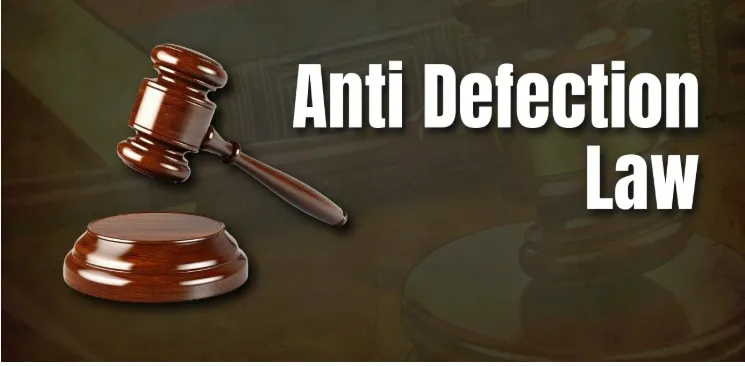
Anti-Defection Law in India

The Supreme Court of India recently gave a final three-week deadline to the Telangana Assembly Speaker to decide pending disqualification petitions against defecting MLAs under the Anti-Defection Law. What is the Anti-Defection Law? The Anti-Defection Law was introduced through the 52nd Amendment (1985), which added the Tenth Schedule to the
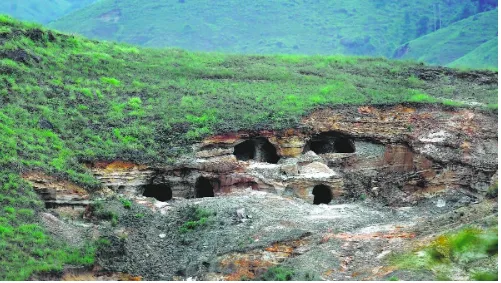
Rat-Hole Mining

A major disaster unfolded in East Jaintia Hills, Meghalaya, when at least 18 workers died following an explosion in an illegally operating rat-hole coal mine. This incident highlights the continued prevalence of rat-hole mining despite bans imposed by the National Green Tribunal (NGT) and the Supreme Court of India. Rat-hole mining is driven
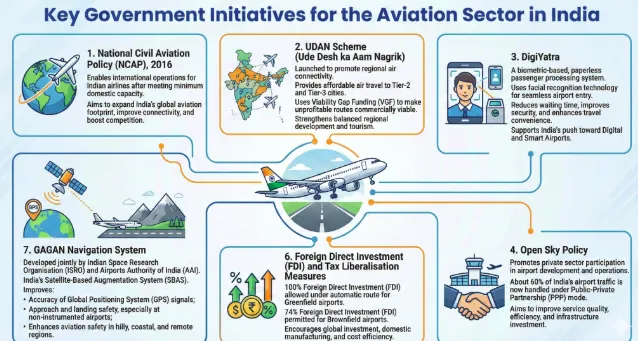
India’s Aviation Sector

India’s aviation sector has grown rapidly, becoming a major economic success story. However, regulatory oversight has not evolved at the same pace. Data-driven monitoring of fares and market behavior is essential to ensure fair competition, prevent market abuse, and shift from reactive crisis management to proactive regulation. Challen
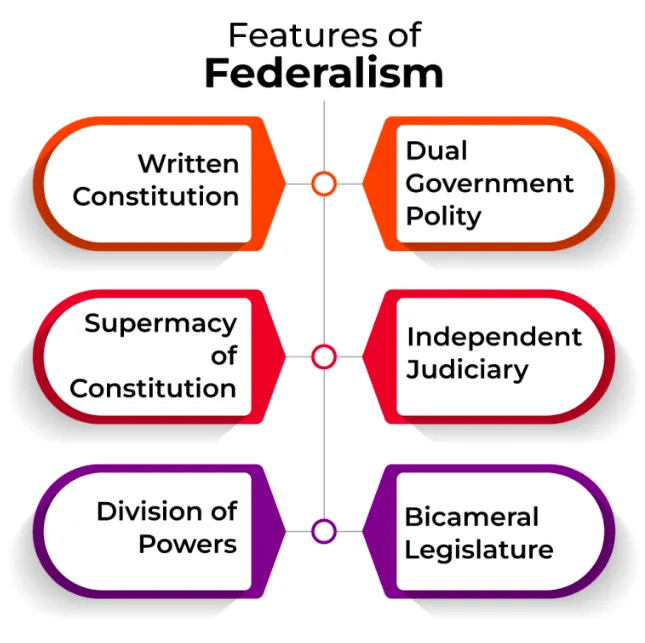
Federalism in India

Recently, a high-level committee on Union–State relations submitted its first report to the Government of Tamil Nadu. The report examines the distribution of powers and responsibilities between the Union and the States, highlighting ongoing debates regarding the balance between central authority and state autonomy. This discussion is clos

India–UAE Economic Partnership

The relationship between India and the United Arab Emirates has evolved from a traditional energy-based partnership into a comprehensive economic and strategic relationship. Over the years, strong political trust, growing trade, and expanding investments have transformed bilateral ties into a diversified economic corridor. The economic partnership

DNA

22 Mar,2026

Toppers

Search By Date

Newsletter Subscription
SMS Alerts

Important Links

UPSC GS Mains Crash Course - RAW