Online Learning Portal
Online Learning Portal

Hybrid Classes
We provide offline, online and recorded lectures in the same amount.

Personalised Mentoring
Every aspirant is unique and the mentoring is customised according to the strengths and weaknesses of the aspirant

Topicwise Mindmaps
In every Lecture. Director Sir will provide conceptual understanding with around 800 Mindmaps.

Quality Content
We provide you the best and Comprehensive content which comes directly or indirectly in UPSC Exam.

DAILY NEWS ANALYSIS
 PRINT
PRINT
28 May, 2020
10 Min Read
By, M. Venkaiah Naidu is the Vice-President of India
Introduction
Today, India is a leading producer of a variety of agricultural and allied produce and an exporter of some of them.
This is due to the relentless hard work and efforts of our farmers against the odds. They are the epitome of the Nishkam Karma philosophy taught by Krishna to Arjuna during the Kurukshetra War: “Karmanye Vadhikaraste Ma Phaleshu Kada Chana (Do your duty without expecting the fruits of your labour)”.
Farmers toil day and night, through winter and summer, whether or not they get adequate returns. But they are not the masters of the price of their toil.
If any class of economic agents of our country has been denied the constitutional right of freedom of trade, it is farmers. They don’t have the freedom of selling their products even in their neighbourhood.
The remunerative price is still a mirage for them. Their farm incomes are at the mercy of markets, middlemen and money lenders.
For every rupee that a farmer makes, others in the supply chain get much more.
Both farmers and consumers are the sufferers of the exploitative procurement and marketing of farm produce.
Restrictions on farmers
# This exploitation has its roots in the Bengal famine of 1943, World War II, and the droughts and food shortages of the 1960s.
# The Essential Commodities Act, 1955, and the Agricultural Produce Market Committee (APMC) Acts of the States are the principal sources of violation of the rights of farmers to sell their produce at a price of their choice.
# These two laws severely restrict the options of farmers to sell their produce. Farmers continue to be the victims of a buyers’ market.
# The country is still far from ensuring efficient value chains for farm produce for want of required infrastructure like cold storage, stocking facilities, and transport of perishable commodities.
# Farmers are the cornerstone of food security in our country. We have come a long way from the ship-to-mouth existence under the PL480 programme of the U.S. to being the leading producer of many kinds of farm produce.
# The restrictive trade and marketing policies being practised with respect to agricultural prices have substantially eroded the incomes of farmers.
Data by Indian Council for Research on International Economic Relations-Organisation for Economic Co-operation and Development (2018)
# A study on agricultural policies in India by the Indian Council for Research on International Economic Relations-Organisation for Economic Co-operation and Development (2018), co-authored by the renowned farm economist Ashok Gulati, was published with startling revelations. It concluded that the restrictions on agricultural marketing amounted to ‘implicit taxation on farmers to the tune of? 45 lakh crore from 2000-01 to 2016-17. This comes to ? 2.56 lakh crore per year. No other country does this.
Much-awaited freedom
# Prime Minister Narendra Modi’s announcement of a ?20 lakh crore stimulus to rev up the economy, Finance Minister Nirmala Sitharaman unveiled the details of a package for the agriculture and allied sectors.
# Apart from the approximately ?4 lakh crore support package for farming and allied sectors, aimed at improving infrastructure and enhancing credit support, the most welcome feature of this package is the firm commitment to rewriting the Essential Commodities Act and the APMC laws.
# The revision of these restrictive laws is long overdue and will remove the hurdles that farmers face in getting a remunerative price for their produce by giving them more options to sell.
# While allowing several buyers to directly access the produce from the farmers, a strong and effective network of Farm Producers’ Organisations should be created to enhance the bargaining power of farmers.
# This will ensure that individual farmers are not exploited. An effective law on contract farming is also the need of the hour, to secure the incomes of farmers besides enabling private investments.
# Dr Gulati, in a recent article, termed this announcement as “a 1991 moment for agriculture”.
# A study by the National Institute of Agricultural Extension Management has revealed that of the 3,500 farmers’ suicides examined, there was no farmer who had supplementary incomes from dairy or poultry.
# The huge support for animal husbandry and fisheries in the stimulus package underlines the need for diversifying the income sources of farmers.
Source: TH
 03 Dec, 25
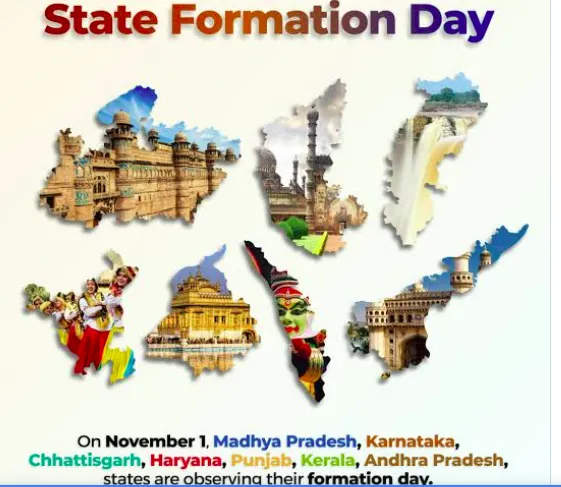
On 1st November, eight Indian states—Andhra Pradesh, Chhattisgarh, Haryana, Karnataka, Kerala, Madhya Pradesh, Punjab, and Tamil Nadu—along with five Union Territories—Andaman and Nicobar Islands, Chandigarh, Delhi, Lakshadweep, and Puducherry—celebrate their Formation Day. This date marks an important milestone in India
 02 Dec, 25
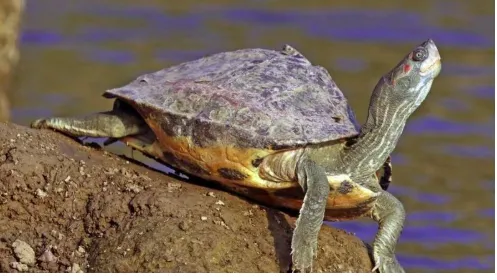
The Turtle Wildlife Sanctuary, also known as the Kachhua Sanctuary, is located in the Varanasi district of Uttar Pradesh. It is recognised as India’s first freshwater turtle wildlife sanctuary, established to conserve endangered turtle species and support the ecological health of the Ganga River. Location and Extent The sanctuary co
 02 Dec, 25
The Ministry of Education plans to introduce Artificial Intelligence (AI) and Computational Thinking (CT) from Class 3 onwards in the 2026–27 academic year. This initiative is part of the National Curriculum Framework for School Education (NCF-SE) 2023 and aligns with the National Education Policy (NEP) 2020. The aim is to prepare student
 02 Dec, 25
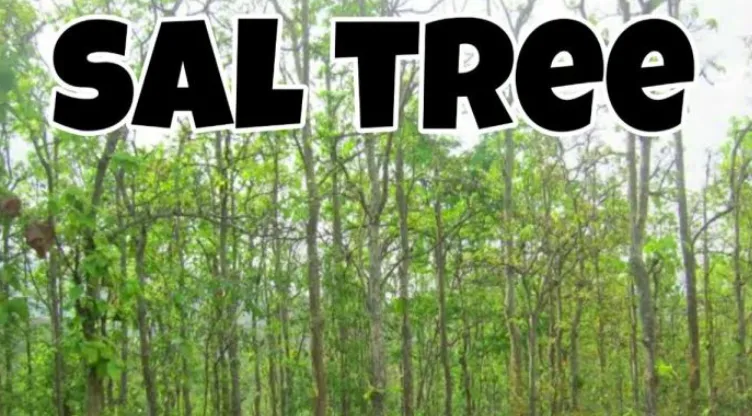
Scientists from the Environment Department of Himachal Pradesh University (HPU) in Shimla have recently revealed that the Sal tree (Shorea robusta) is the most effective natural air purifier for combating rising pollution levels. Their findings highlight the tree’s superior capacity to trap dust, absorb gases, and cleanse the air compared
 02 Dec, 25
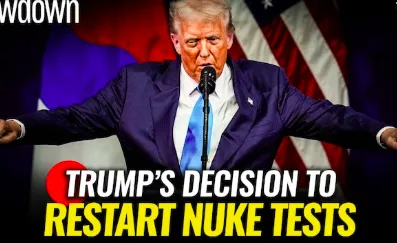
The President of the United States has ordered the resumption of nuclear weapon testing after a gap of 33 years, the last test being in 1992. This decision marks a significant shift in global nuclear policy and has far-reaching implications for geopolitics, the environment, and international security. Status of Global Nuclear Weapon Testing
 03 Dec,2025










Our Popular Courses
Module wise Prelims Batches
Mains Batches
Test Series

 24 × 7 Support :
8287714422
24 × 7 Support :
8287714422 Whatsapp :
8010068998
Whatsapp :
8010068998 Email Us: query@aspireias.com


 My Notes
 Geography And Environment


