Online Learning Portal
Online Learning Portal

Hybrid Classes
We provide offline, online and recorded lectures in the same amount.

Personalised Mentoring
Every aspirant is unique and the mentoring is customised according to the strengths and weaknesses of the aspirant

Topicwise Mindmaps
In every Lecture. Director Sir will provide conceptual understanding with around 800 Mindmaps.

Quality Content
We provide you the best and Comprehensive content which comes directly or indirectly in UPSC Exam.

DAILY NEWS ANALYSIS
 PRINT
PRINT
03 July, 2020
10 Min Read
By, Ajit Prakash Shah is retired Chief Justice, Delhi and Madras High Courts
Context
# By now, everyone has heard of the tragic deaths of P. Jayaraj and J. Benicks, a father-son duo in a small town in Thoothukudi. Jayaraj, 58, was arrested by the police following an altercation with them on keeping his son’s mobile phone shop open in violation of lockdown rules. After Benicks was also taken into custody, the two were mercilessly thrashed to death.
# Being found guilty of the ‘offence’ of keeping a shop open during the lockdown would have ordinarily granted Jayaraj and Benicks a maximum of only three months of imprisonment.
The series of events, starting with the cruel lockdown enforcement methods and concluding with the utterly gruesome and entirely avoidable deaths, is a sign that we are living with a completely broken system of law enforcement.
Endemic to police culture
# The Tamil Nadu Police has acquired notoriety (famous) over the decades for employing torturous methods for law enforcement.
# Torture is, in fact, an integral part of police culture all over the country. Indeed, it would not be amiss to argue that this culture in India today is reminiscent of the brutality of the colonial police forces that we are so keen to forget.
# Official data also accept that police torture is a reality, a compelling case found in reports made by NGOs and observers over the years, including by the Asian Centre for Human Rights, Amnesty International and People’s Union for Democratic Rights.
# The data on torture show that it is not only an integral part of India’s policing culture; in some investigations (such as terror cases), it is treated as the centrepiece.
# The fact is that the current laws facilitate such torture, such as through the admissibility of confessions as evidence under the Terrorist and Disruptive Activities (Prevention) Act and the Prevention of Terrorism Act, which continues refurbished as the Maharashtra Control of Organised Crime Act.
# Unfortunately, policing has also not mainstreamed the upgrade to newer technologies, like DNA analysis, which can directly impact law enforcement practices.
# The official position on state-sponsored or state-endorsed torture can be seen in a 2017 quote by India’s then Attorney-General.
# In his opening speech in Geneva at the country’s universal periodic review at the United Nations Human Rights Council, the Attorney-General invoked Gandhi and Buddha, stating that “India…believe[s] in peace, non-violence and upholding human dignity. As such, the concept of torture is completely alien to our culture and it has no place in the governance of the nation.” This would be a textbook example of hypocrisy, if ever.
# What we really need is a recognition that torture is an endemic and systemic problem, and the only answer lies in the stringent legal framework that is aligned with and committed to the principles of international law under the UN Convention Against Torture (UNCAT) to which India has been a signatory since 1997.
Supreme Court on torture
# Even before India signed the UNCAT, our Supreme Court had brought about glorious jurisprudence highlighting the many problems with the country’s torture culture.
# In Raghbir Singh v. State of Haryana (1980), the Court was “deeply disturbed by the diabolical recurrence of police torture resulting in a terrible scare in the minds of common citizens that their lives and liberty are under a new peril when the guardians of the law gore human rights to death.”
# These sentiments were revisited in Francis Coralie Mullin v. Union Territory of Delhi (1981) and Sheela Barse v. State of Maharashtra (1987), where the Court condemned cruelty and torture as violative of Article 21.
# This interpretation of Article 21 is consistent with the principles contained in the UNCAT.
# The UNCAT aims to prevent torture and other acts of cruel, inhuman, or degrading treatment or punishment around the world.
# Although India signed the UNCAT in 1997, it is yet to ratify it.
# In 2010, a weak Prevention of Torture Bill was passed by the Lok Sabha, and the Rajya Sabha later sent it to a Select Committee for review in alignment with the UNCAT. But the Committee’s recommended law, submitted in 2012, never fructified, as the then UPA government allowed the Bill to lapse.
# By 2017, the Law Commission had submitted its 273rd report and an accompanying draft torture law. But the Supreme Court dismissed the petition on grounds that the government cannot be compelled to make a law by mandamus; treaty ratification was a political decision; and that it was a policy matter.
# This rejection was a sign of the Supreme Court turning its back on its own glorious jurisprudence, and its efforts to aid law-making in the past, whether in using the Convention on the Elimination of all Forms of Discrimination Against Women (CEDAW) to reform the law around workplace sexual harassment; or customary international law in environmental cases; or the right to privacy — this long and varied list is revelatory of a proactive Court that sees itself as responsible for nudging Parliament into legislative action.
#EndTortureToday
# There have been opportunities for 23 years to enact a law on torture, but they have been studiously avoided. State consultation also has no meaning.
# It is evident that all governments enjoy the status quo, where the police are used as a tool for self-preservation.
# The #BlackLivesMatter movement, led by the people, started a national debate in the U.S. on policing, including radical reforms such as defunding and disarming the police.
Way ahead
Only the people can rise up against these practices, just as they are doing in other parts of the world. And by people, I include important stakeholders like the Bar, the media, civil society and student groups
Source: TH
 18 Mar, 26
The Supreme Court of India recently gave a final three-week deadline to the Telangana Assembly Speaker to decide pending disqualification petitions against defecting MLAs under the Anti-Defection Law. What is the Anti-Defection Law? The Anti-Defection Law was introduced through the 52nd Amendment (1985), which added the Tenth Schedule to the
 18 Mar, 26
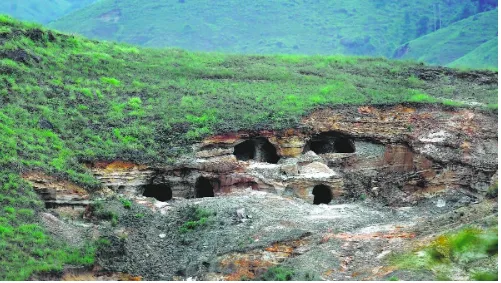
A major disaster unfolded in East Jaintia Hills, Meghalaya, when at least 18 workers died following an explosion in an illegally operating rat-hole coal mine. This incident highlights the continued prevalence of rat-hole mining despite bans imposed by the National Green Tribunal (NGT) and the Supreme Court of India. Rat-hole mining is driven
 17 Mar, 26
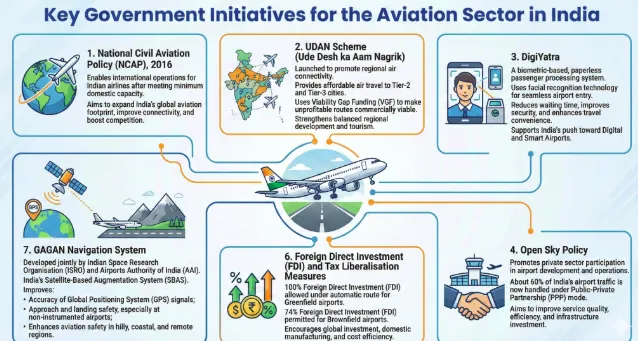
India’s aviation sector has grown rapidly, becoming a major economic success story. However, regulatory oversight has not evolved at the same pace. Data-driven monitoring of fares and market behavior is essential to ensure fair competition, prevent market abuse, and shift from reactive crisis management to proactive regulation. Challen
 14 Mar, 26
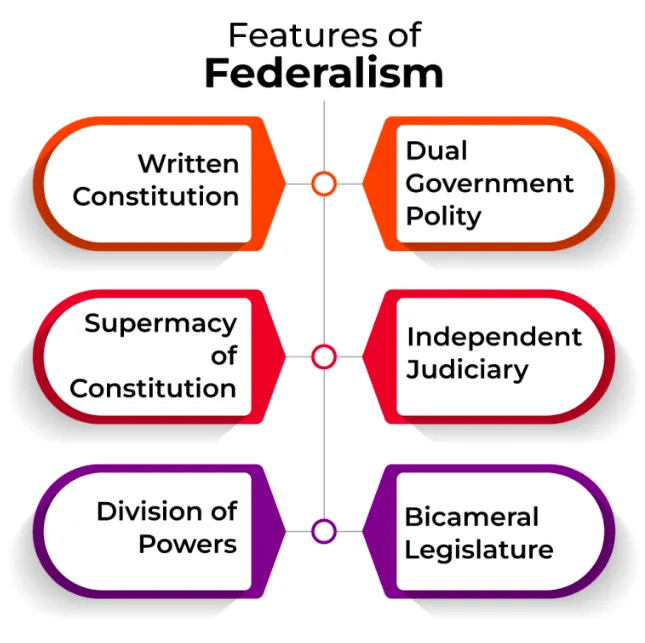
Recently, a high-level committee on Union–State relations submitted its first report to the Government of Tamil Nadu. The report examines the distribution of powers and responsibilities between the Union and the States, highlighting ongoing debates regarding the balance between central authority and state autonomy. This discussion is clos
 14 Mar, 26
The relationship between India and the United Arab Emirates has evolved from a traditional energy-based partnership into a comprehensive economic and strategic relationship. Over the years, strong political trust, growing trade, and expanding investments have transformed bilateral ties into a diversified economic corridor. The economic partnership
 22 Mar,2026










Our Popular Courses
Module wise Prelims Batches
Mains Batches
Test Series

 24 × 7 Support :
8287714422
24 × 7 Support :
8287714422 Whatsapp :
8010068998
Whatsapp :
8010068998 Email Us: query@aspireias.com


 My Notes
 Geography And Environment


