×

UPSC Courses

DNA banner

DAILY NEWS ANALYSIS

  • 06 January, 2023

  • 7 Min Read

Right to Strike

Right to Strike

  • Government employees who take part in general strikes that disrupt daily life for the general public and the public purse are not entitled to protection under Article 19(1)(c) of the Constitution and are also in violation of the Kerala Government Servants' Conduct Rules, 1960, according to the Kerala High Court.

What does the Right to Strike mean?

  • It is the most practical and last option available to workers to achieve economic fairness.
  • Around the world, the definition of a strike has changed considerably, and most countries now grant workers the freedom to strike.
  • Employees who are on strike refuse to work under the circumstances that their bosses have set.
  • Strikes can occur for a variety of reasons, although they typically do so in response to poor economic conditions (this is what is meant by an economic strike, which aims to raise pay and benefits) or unfair labor laws (intended to improve work conditions).
  • In India, the Industrial Disputes Act, 1957's Section 22(1)(a) guarantees the right to strike as a legislative right.
  • Give the workers the right to strike in every nation, regardless of whether it is democratic, capitalist, or socialist. But if this right is abused, it will affect the industry's ability to produce and make money, thus it must only be utilized as a last choice.
  • The nation's economy would ultimately be impacted by this.
  • According to Article 19 of the Indian Constitution, the right to protest is an essential right.

Constitutional clauses pertaining to the right to strike:

  • Even the fundamental freedom to form an association can be limited under Article 19(4) in the interest of public order and other considerations for the armed services and police, where discipline is the most crucial precondition.
  • In order to secure the correct performance of their responsibilities and the maintenance of discipline among them, personnel of the armed forces or the forces responsible for maintaining public order may have their rights restricted or abrogated by legislation under Article 33 of the Constitution.
  • The Industrial Disputes Act of 1947 granted the right to strike in India.
  • There is no explicit mention of strikes in the Indian Constitution.
  • The Supreme Court ruled that strike is not a fundamental right in Kameshwar Prasad v. The State of Bihar 1958, settling the case. Employees of the government do not have the legal or moral right to strike.
  • The Police Forces (Restriction of Rights) Act, 1966, and the Rules as amended by Amendment Rules, 1970, came into effect, restricting the ability of members of the non-gazetted police force to create associations. In Delhi Police v. Union of India (1986), the Supreme Court maintained these restrictions.
  • While the freedom to associate is a fundamental right, the right to be recognized for one's affiliations is not.

Position in India:

  • Unlike America, India does not explicitly acknowledge the right to strike under the law.
  • The Trade Union Act of 1926 established a limited right to strike by allowing those actions taken by a registered trade union in support of a trade dispute that would have otherwise violated common economic law.
  • Today, the right to strike is acknowledged as a valid tool of trade unions, but only to the extent that it is permitted within the bounds set by the legislation itself.
  • The Indian constitution does not grant an absolute right to strike, but it does follow from the fundamental freedom to establish a union.
  • International Convention on the Right to Strike: The International Labor Organization's conventions have also recognised the right to strike (ILO).
  • India is one of the original ILO members.

Conclusion:

  • According to Article 19(1)(a) of the Constitution, there is no basic right to strike.
  • No reasonable justification for strikes exists. The most common misuse of the strike as a weapon is to create chaos.
  • The core of trade unions and groups is collective bargaining, but this is only possible if the right to strike is recognized as a fundamental right.

Source: The Hindu


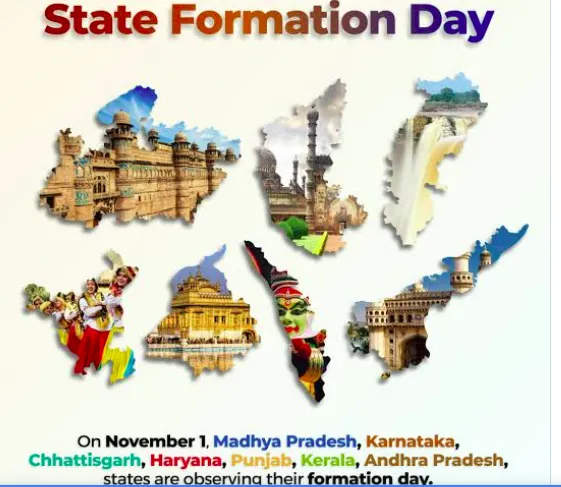
Formation Day

On 1st November, eight Indian states—Andhra Pradesh, Chhattisgarh, Haryana, Karnataka, Kerala, Madhya Pradesh, Punjab, and Tamil Nadu—along with five Union Territories—Andaman and Nicobar Islands, Chandigarh, Delhi, Lakshadweep, and Puducherry—celebrate their Formation Day. This date marks an important milestone in India
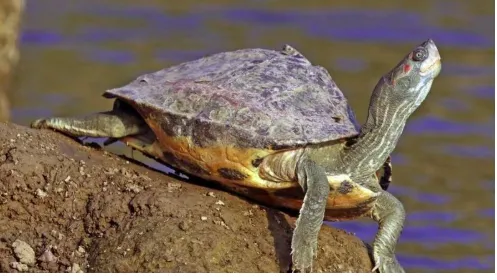
Turtle (Kachhua) Wildlife Sanctuary

The Turtle Wildlife Sanctuary, also known as the Kachhua Sanctuary, is located in the Varanasi district of Uttar Pradesh. It is recognised as India’s first freshwater turtle wildlife sanctuary, established to conserve endangered turtle species and support the ecological health of the Ganga River. Location and Extent The sanctuary co
Introduction of AI and Computational Thinking (CT) in

The Ministry of Education plans to introduce Artificial Intelligence (AI) and Computational Thinking (CT) from Class 3 onwards in the 2026–27 academic year. This initiative is part of the National Curriculum Framework for School Education (NCF-SE) 2023 and aligns with the National Education Policy (NEP) 2020. The aim is to prepare student
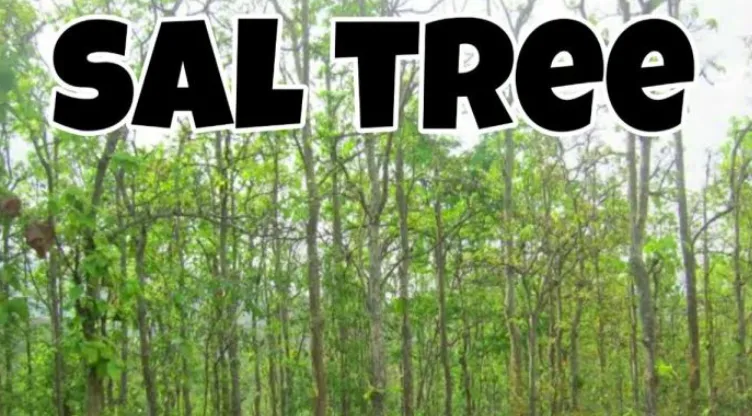
Sal Tree

Scientists from the Environment Department of Himachal Pradesh University (HPU) in Shimla have recently revealed that the Sal tree (Shorea robusta) is the most effective natural air purifier for combating rising pollution levels. Their findings highlight the tree’s superior capacity to trap dust, absorb gases, and cleanse the air compared
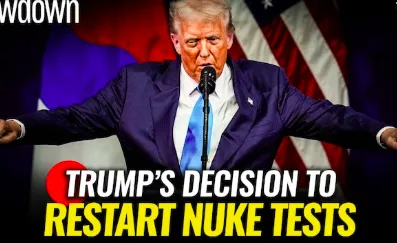
US Resumes Nuclear Weapon Testing

The President of the United States has ordered the resumption of nuclear weapon testing after a gap of 33 years, the last test being in 1992. This decision marks a significant shift in global nuclear policy and has far-reaching implications for geopolitics, the environment, and international security. Status of Global Nuclear Weapon Testing

DNA

03 Dec,2025

Toppers

Search By Date

Newsletter Subscription
SMS Alerts

Important Links

UPSC GS Mains Crash Course - RAW Prelims Answer Key 2024