Online Learning Portal
Online Learning Portal

Hybrid Classes
We provide offline, online and recorded lectures in the same amount.

Personalised Mentoring
Every aspirant is unique and the mentoring is customised according to the strengths and weaknesses of the aspirant

Topicwise Mindmaps
In every Lecture. Director Sir will provide conceptual understanding with around 800 Mindmaps.

Quality Content
We provide you the best and Comprehensive content which comes directly or indirectly in UPSC Exam.

DAILY NEWS ANALYSIS
 PRINT
PRINT
15 October, 2025
4 Min Read
The Andhra Pradesh High Court recently made an important ruling regarding the doctrine of contributory negligence in criminal law. The court clarified that contributory negligence does not apply to criminal actions. In this case, a driver involved in an accident caused by rash and negligent driving, which led to the death of a person, was held liable under Section 304A of the IPC (causing death by negligence), even if there was some degree of negligence on the part of the victim.
This judgment has significant implications for how criminal liability is determined in road accidents and raises important questions about the applicability of contributory negligence in criminal cases.
The doctrine of contributory negligence is a legal principle that suggests that individuals have a duty to take reasonable care for their own safety and well-being. If someone’s own actions contribute to their injury or damage, they may be considered partially at fault for the harm suffered.
Reasonable Care: If a person fails to exercise reasonable care and their actions contribute to the damage, they can be partly responsible for the harm.
Defendant’s Defence: The defendant can argue contributory negligence if they can prove that the plaintiff's lack of care contributed to the injury. For example, if a person is hit by a reckless driver but was also not following traffic rules, the defendant may use contributory negligence as a defence.
Volenti Non Fit Injuria: The doctrine is based on the Latin maxim meaning “to a willing person, no harm is done.” It implies that if a person voluntarily exposed themselves to harm (due to their own negligence), the defendant might not be fully liable.
Burden of Proof: The burden of proof rests on the defendant. They must demonstrate that the plaintiff's negligence contributed to the injury. If the defendant is found to have a legal duty to ensure the plaintiff's safety, contributory negligence may not apply.
Scenario: If a pedestrian (A) is walking on the wrong side of the road and gets hit by a vehicle (B) driving recklessly, A’s action of walking on the wrong side could be considered contributory negligence.
The court rejected the applicability of contributory negligence in criminal cases where negligence leads to death. Specifically, in cases of rash or negligent driving, even if the victim shows some negligence, the driver remains criminally liable under Section 304A of IPC.
Section 304A of IPC deals with causing death by negligence, and the driver's rash or negligent behavior was seen as the primary cause of the fatal accident, irrespective of any negligence on the victim's part.
While contributory negligence can reduce the amount of compensation in civil cases (i.e., in tort law), India applies a different concept called "comparative negligence":
In comparative negligence, damages are distributed based on the relative fault of each party involved in an incident.
Courts weigh the degree of responsibility each party holds and apportion liability accordingly. This is particularly common in road accidents or personal injury cases.
If two drivers are involved in a crash and one is 80% at fault while the other is 20% at fault, the damages will be divided according to their respective contributions to the accident.
Criminal Actions: In criminal law, contributory negligence generally does not reduce criminal liability. If a person's negligent or rash act directly causes harm or death, they are criminally responsible, regardless of any negligence by the victim.
The Andhra Pradesh High Court ruling supports this view by affirming that criminal negligence—like causing death by reckless driving—is not mitigated by the victim's potential contribution to the accident.
This ruling has important implications for criminal law:
In criminal cases, contributory negligence will not act as a defence to reduce the liability of the accused.
This ensures that individuals who cause harm through gross negligence or recklessness, such as rash driving leading to fatal accidents, will be held criminally liable even if the victim contributed to the incident.
The ruling emphasizes that criminal law's primary concern is punishing reckless or negligent behavior that results in harm, regardless of the victim's actions.
This Andhra Pradesh High Court ruling reinforces that in cases of criminal negligence, the accused (for example, the driver responsible for an accident) can still be held liable under criminal law, even if the victim’s negligence contributed in some way. It helps clarify the limits of contributory negligence in criminal law and ensures justice for victims of negligent acts
Source: THE HINDU
 18 Mar, 26
The Supreme Court of India recently gave a final three-week deadline to the Telangana Assembly Speaker to decide pending disqualification petitions against defecting MLAs under the Anti-Defection Law. What is the Anti-Defection Law? The Anti-Defection Law was introduced through the 52nd Amendment (1985), which added the Tenth Schedule to the
 18 Mar, 26
A major disaster unfolded in East Jaintia Hills, Meghalaya, when at least 18 workers died following an explosion in an illegally operating rat-hole coal mine. This incident highlights the continued prevalence of rat-hole mining despite bans imposed by the National Green Tribunal (NGT) and the Supreme Court of India. Rat-hole mining is driven
 17 Mar, 26
India’s aviation sector has grown rapidly, becoming a major economic success story. However, regulatory oversight has not evolved at the same pace. Data-driven monitoring of fares and market behavior is essential to ensure fair competition, prevent market abuse, and shift from reactive crisis management to proactive regulation. Challen
 14 Mar, 26
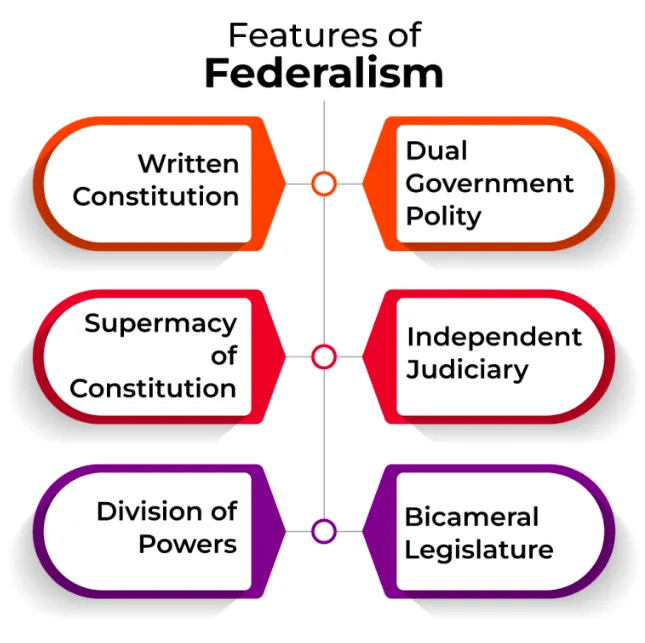
Recently, a high-level committee on Union–State relations submitted its first report to the Government of Tamil Nadu. The report examines the distribution of powers and responsibilities between the Union and the States, highlighting ongoing debates regarding the balance between central authority and state autonomy. This discussion is clos
 14 Mar, 26
The relationship between India and the United Arab Emirates has evolved from a traditional energy-based partnership into a comprehensive economic and strategic relationship. Over the years, strong political trust, growing trade, and expanding investments have transformed bilateral ties into a diversified economic corridor. The economic partnership
 22 Mar,2026










Our Popular Courses
Module wise Prelims Batches
Mains Batches
Test Series

 24 × 7 Support :
8287714422
24 × 7 Support :
8287714422 Whatsapp :
8010068998
Whatsapp :
8010068998 Email Us: query@aspireias.com


 My Notes
 Geography And Environment


